
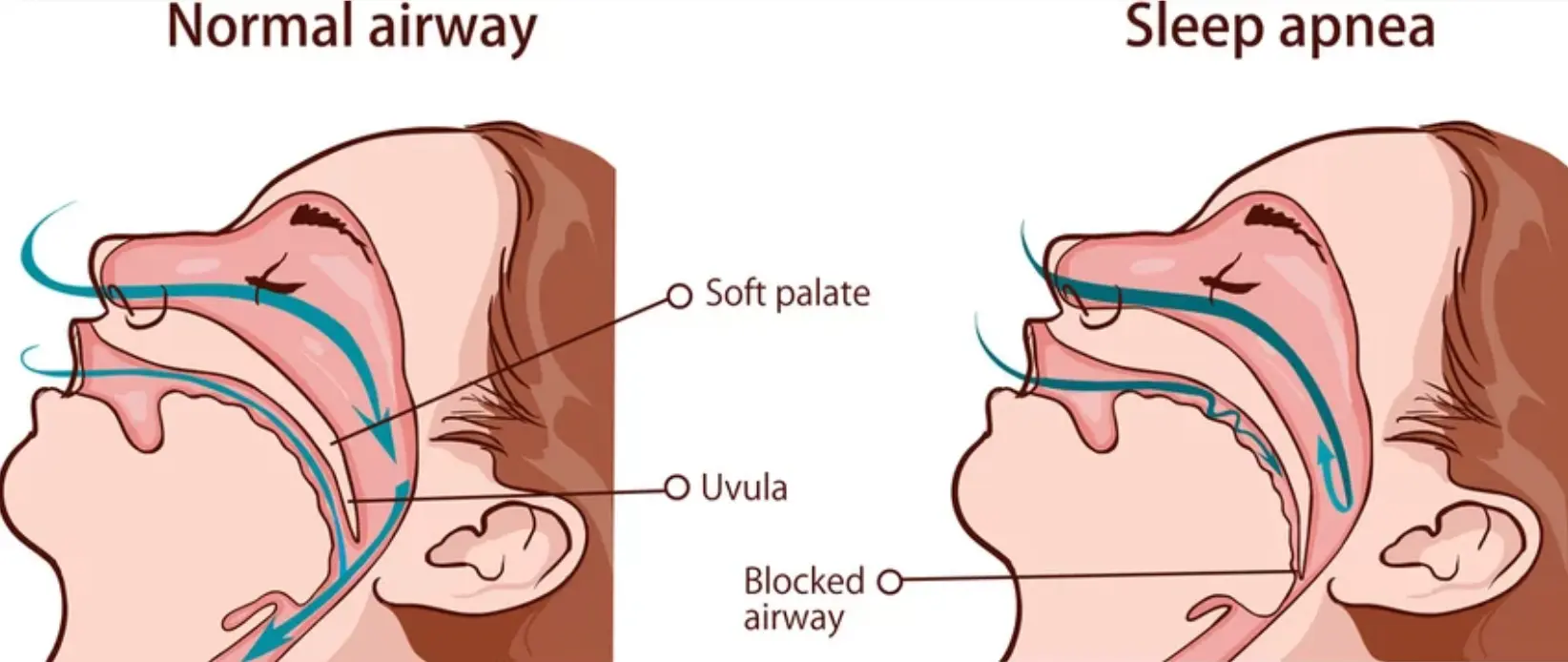
Sleep apnea is a common yet serious sleep disorder characterized by repeated interruptions in breathing during sleep. These interruptions, known as apneas, can last from a few seconds to minutes and can occur multiple times throughout the night, leading to poor sleep quality and a range of health issues.
Types of Sleep Apnea
Obstructive Sleep Apnea (OSA)
The most prevalent form – occurs when the muscles in the back of the throat fail to keep the airway open. This blockage can be caused by obesity, enlarged tonsils, or a naturally narrow throat, and often results in loud snoring or choking noises as the body resumes breathing.
Central Sleep Apnea (CSA)
Less common – occurs when the brain fails to send the proper signals to the muscles that control breathing. Unlike OSA, snoring is not a prominent feature.
Complex/Mixed Sleep Apnea
A combination of obstructive and central sleep apnea, often diagnosed when OSA treatment reveals underlying central apnea.
Common Causes
- Excess weight and obesity
- Enlarged tonsils or adenoids
- Narrow airway anatomy
- Family history
- Smoking and alcohol use
- Nasal congestion
Symptoms to Watch For
- Loud snoring
- Episodes of stopped breathing witnessed by others
- Gasping for air during sleep
- Morning headaches
- Excessive daytime sleepiness
- Difficulty concentrating
If you suspect sleep apnea, consult a pulmonologist for evaluation and a sleep study. Early treatment prevents complications like hypertension, heart disease and stroke.